
Small account profitability
Feb 14, 2026 by Dihan Stoltz · 9 min read
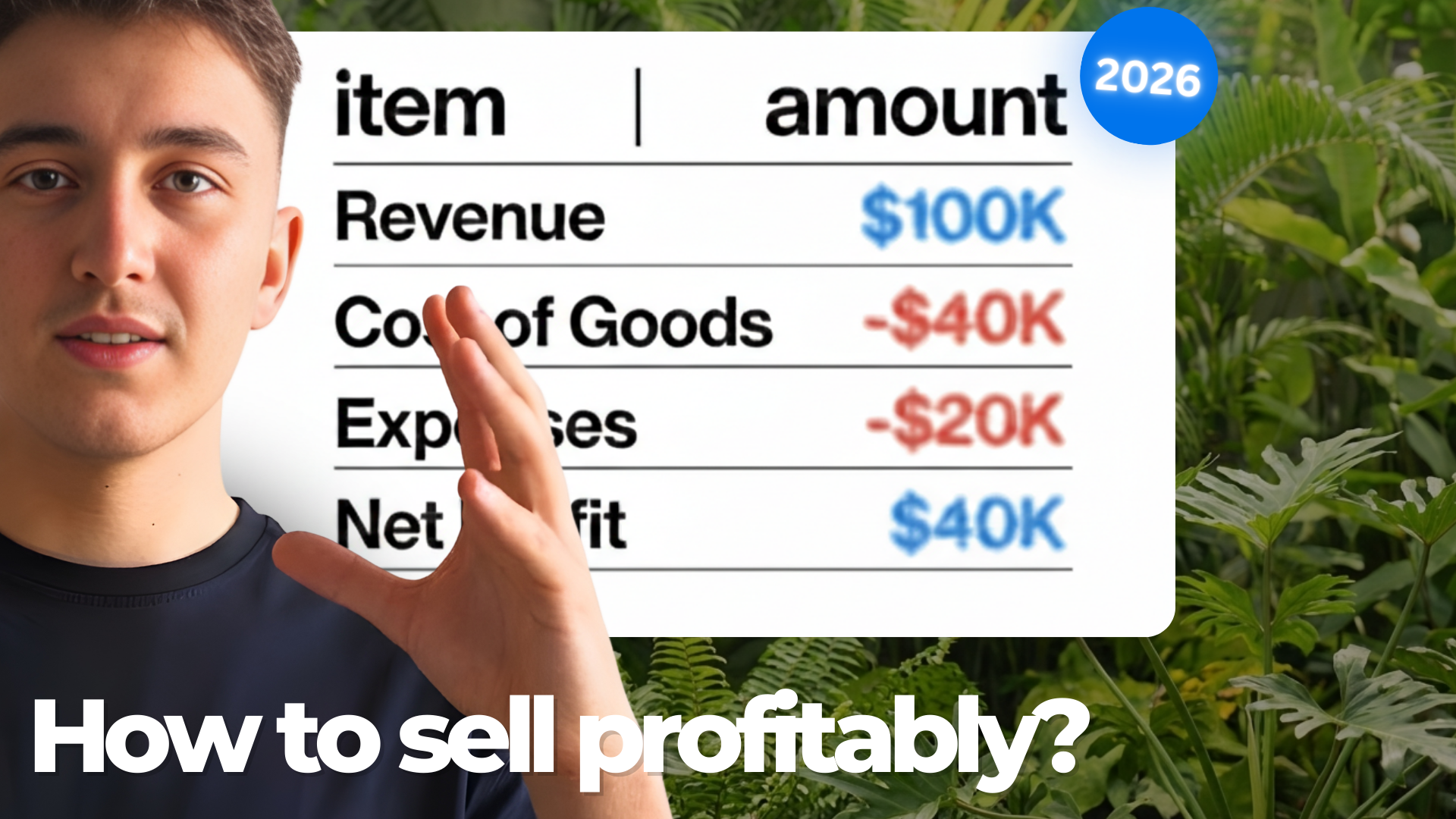
Do you need a big Takealot account to make money? Does a low revenue account with high margins actually turn a profit after all the fees? These are questions every seller asks — especially when you're just starting out or running a smaller operation. Today I'm going to break down exactly how much a small account made in the last 30 days, using real numbers pulled straight from TSeller's profitability analytics. Spoiler: you don't need to be doing six figures a month to walk away with serious profit.
The 30-Day Snapshot
Using TSeller's profitability analytics, we pulled the numbers for January — from the 1st to the 31st. Here's what the account looked like: R32,000 in total sales, R13,000 in gross profit, 89 units sold, a 42% profit margin, R18,000 in total expenses (Takealot success fees, fulfilment fees, sponsored product ads, shipping costs), and zero returns. On top of that, the additional Takealot fees broke down to R2,300 in advertising credits topped up, R104 in stock transfer fees, R39 in storage fees, and the standard Takealot subscription.
Exporting the Numbers — The Full Breakdown
To get the complete picture, we exported the data from TSeller into Excel. The export is configured as VAT inclusive since this particular business isn't VAT registered. We also excluded orders still being prepared — because Takealot hasn't paid those out yet, so they shouldn't count towards what's actually in the bank. TSeller lets you add additional overhead costs into the export too. This business has a staff member who handles packaging, costing R3,000 per month. That gets factored into the final profit calculation, giving you a true picture of what the business actually makes.
Breaking Down the Product-Level Numbers
Once you open the export in Excel, you can see everything at a product level. Average selling prices (which fluctuate because of promotions and price changes throughout the month), success fees per unit, fulfilment fees per unit, product cost per unit, other costs like packaging and sellotape, and total input cost. The gross margins on individual products were impressive — 36%, nearly 70%, almost 70% again, close to 40%, and 36%. When you know your margins at this level, you can make informed decisions about which products to push harder and which ones to reconsider.
Units Sold and Net Sales by Product
The account sold across 7 SKUs: 28 units of one product generating R12,000, 26 units generating R8,700, 13 units generating R7,000, 16 units generating R2,400, and smaller quantities on the rest. For the top product alone, the total input cost for 28 units was R6,878 against R12,000 in net sales — leaving R5,200 in gross profit from a single product. Every SKU is broken down the same way, so you always know exactly where your money is coming from.
The Additional Fees — Where Most Sellers Lose Money
This is where it gets interesting, and where a lot of Takealot sellers actually lose money without realising it. The additional fees included R2,300 in advertising credits, R103.50 in stock transfers, R39 in storage fees, R460 for the Takealot subscription, and R3,000 for the staff member. That's R5,900 in total additional fees on top of the product-level costs. Most sellers don't account for these properly, and that's why they think they're profitable when they're not.
The Final Number — R10,600 in Profit
After every single cost is accounted for — product costs, shipping, Takealot success fees, fulfilment fees, advertising, stock transfers, storage, subscription, and staff wages — the account was left with R10,600 in gross profit. That's a 33% gross margin on R32,000 in revenue. This business put R10,600 in the bank from a single month, after everything was paid. And it did it with just 7 SKUs.
You Don't Need a Big Account
R32,000 a month is low revenue compared to other Takealot accounts. But a 33% gross profit margin on that is exceptional. The takeaway is simple: you don't need to be doing hundreds of thousands in sales. You need products with high margins, and you need to sell them profitably. This account proved that 7 SKUs, managed properly with full visibility into the numbers, can generate meaningful income. The sellers who struggle are the ones chasing revenue without understanding their actual profitability.
Why Knowing Your Numbers Changes Everything
The only thing that matters in business is profit. It doesn't help doing R100,000 in revenue if you're losing money after fees. TSeller's profitability analytics give you complete visibility — from high-level monthly snapshots down to per-unit margins on every product. You can see exactly where you're making money, where you're losing it, and what to fix. The export feature lets you pull everything into Excel with your real costs, additional overheads, and Takealot fees all factored in. It's available on the TSeller web app and on mobile. If you're selling on Takealot and you don't know your exact profit margins, you're flying blind.
Conclusion
Is it profitable selling on Takealot? The numbers speak for themselves. A small account with just 7 SKUs generated R10,600 in profit from R32,000 in revenue — a 33% gross margin after every fee and expense. You don't need a massive Takealot account to make real money. You need the right products, the right margins, and full visibility into your numbers. Use TSeller to work out your profitability, see how your business actually ends up at the end of the month, and make decisions based on data — not guesswork.